Bracelet
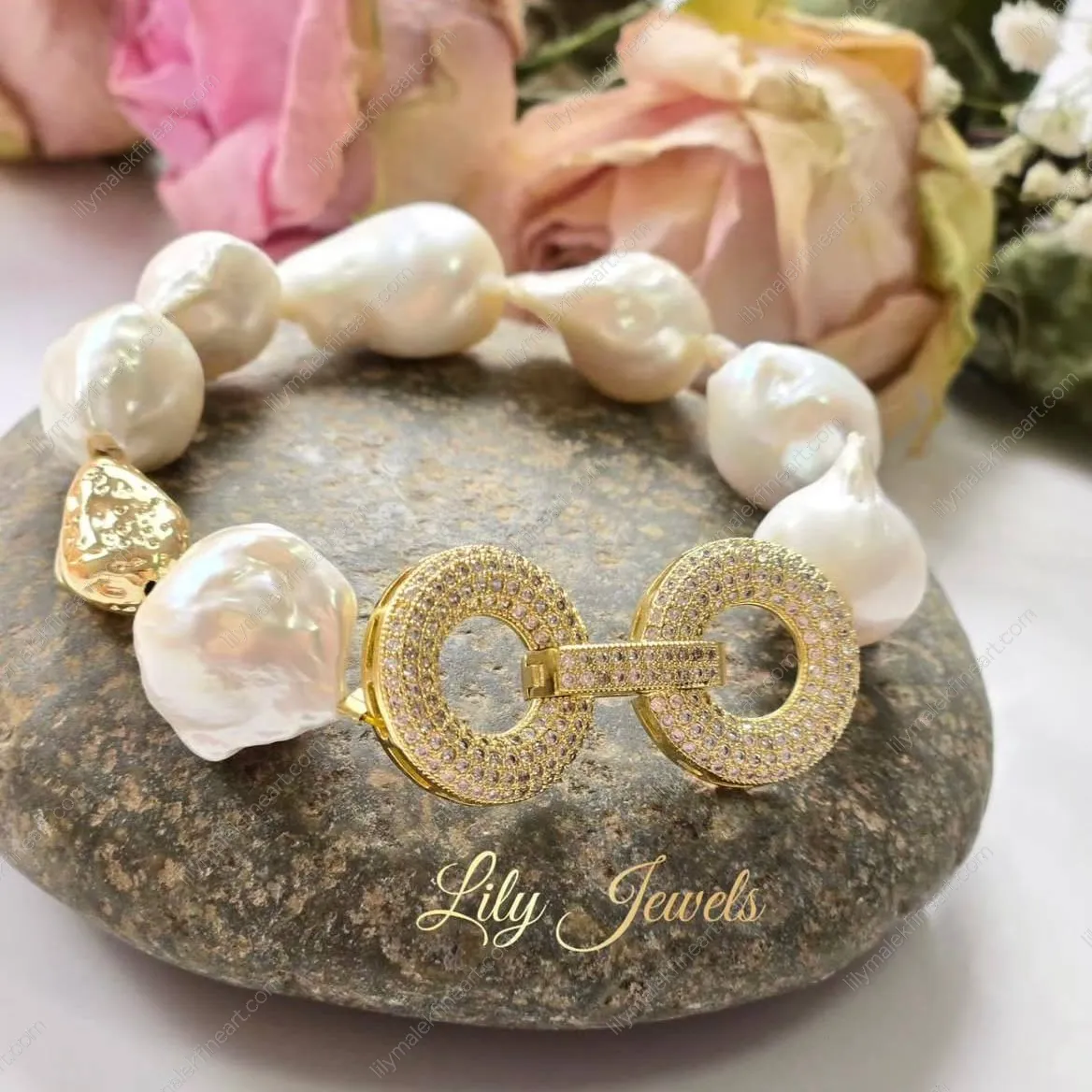
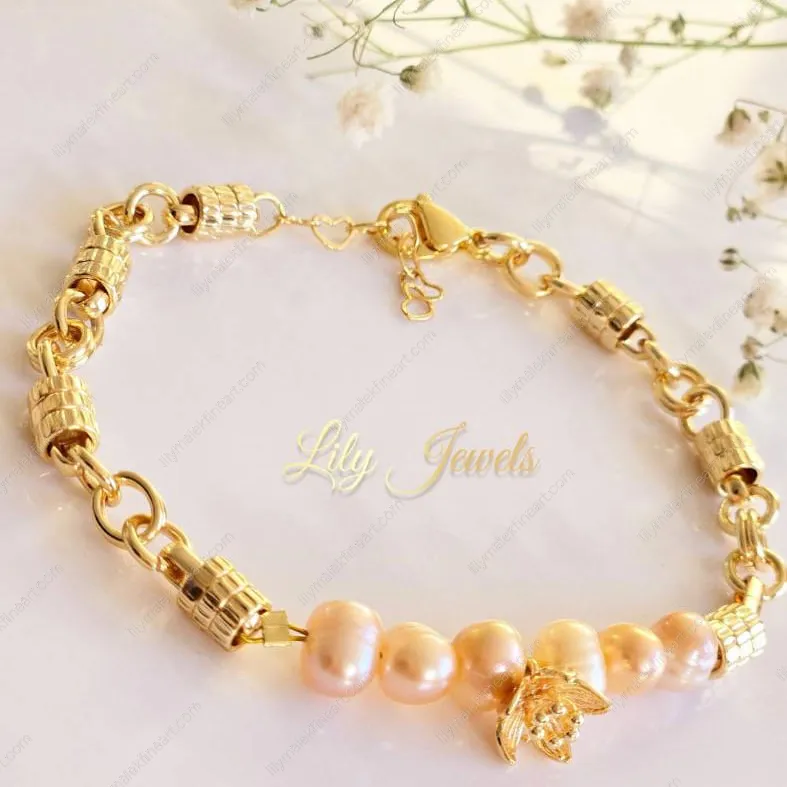
Baroque Pearl Pavé Clasp Bracelet
Gold-tone metal · Pearl-style beads, Clear crystal stones
Price $60 USD $85 CAD €54 EUR Regular price
Available
Shop
Handmade jewelry by Lily Malek — necklaces, bracelets and earrings made by hand in Edmonton. Sizes, materials and stones are listed on every piece.
4 pieces
Bracelet
Gold-tone metal · Pearl-style beads, Clear crystal stones
Price $60 USD $85 CAD €54 EUR Regular price
 One of a kind
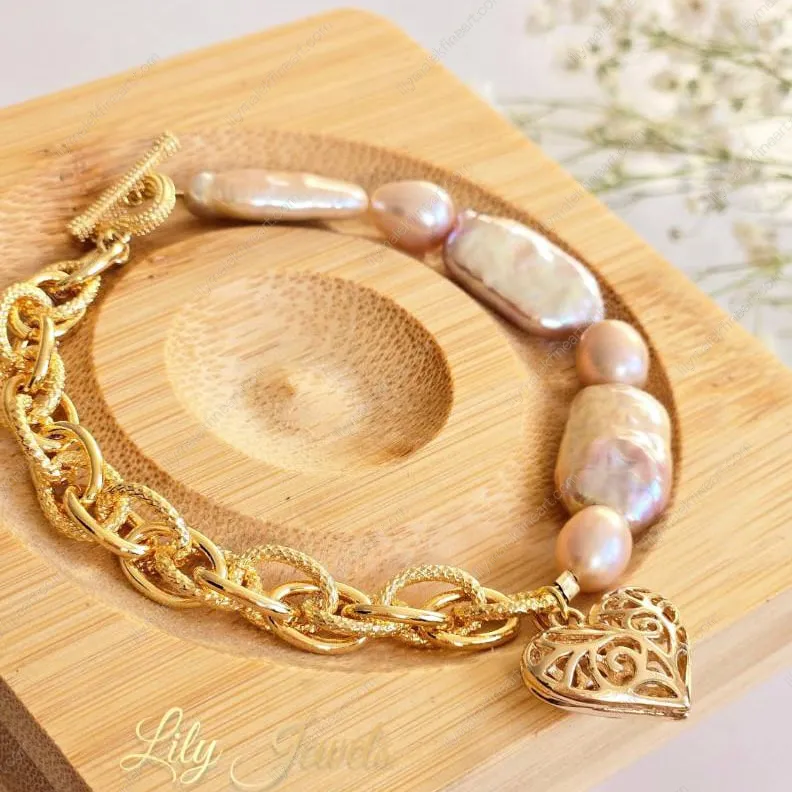
Bracelet
Gold-tone metal · Pearl-style beads
Price USD CAD EUR Regular price
 One of a kind
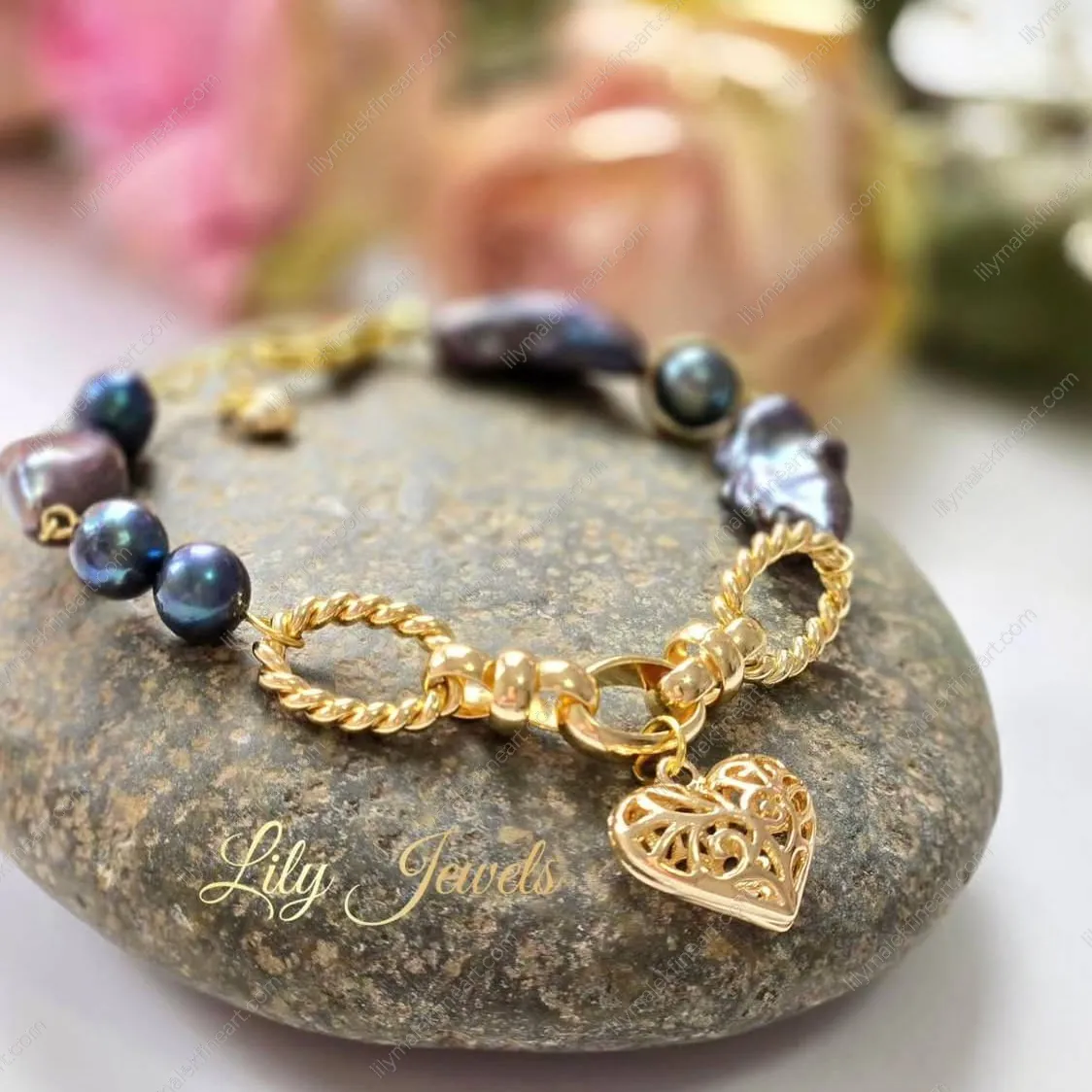
Bracelet
Gold-tone metal · Pearl-style beads
Price USD CAD EUR Regular price
 One of a kind
Bracelet
Gold-tone metal · Pearl-style beads
Price USD CAD EUR Regular price
Try another type, stone or material, or turn off “Available now”.
Before you choose
How lengths sit, how to measure your wrist, and how to keep handmade pieces bright.
| Length | Style | Where it sits |
|---|---|---|
| 14 in (35.5 cm) | Choker | Fits closely around the neck. |
| 16 in (40.5 cm) | Choker / collar | Rests at the base of the neck. |
| 18 in (45.5 cm) | Princess | Falls just below the collarbone — the most common length. |
| 20 in (51 cm) | Matinee | A little below the collarbone; suits higher necklines. |
| 24 in (61 cm) | Matinee (long) | On the upper chest. |
| 30 in (76 cm) | Opera | Below the bust; can be doubled. |
Lengths are measured end to end, including the clasp. Where a necklace sits also depends on neck size and a pendant adds its own drop below the chain. An extender chain lets you wear one piece at more than one length.
Each listing gives the bracelet’s finished length end to end, including the clasp — compare it with your wrist size plus ease. Adjustable bracelets list their shortest and longest lengths. A rigid bangle needs to pass over the widest part of your hand instead: measure around your hand with the thumb tucked in.
| Wrist size | Snug (+0.5 in) | Comfortable (+0.75 in) | Loose (+1 in) |
|---|---|---|---|
| 5.5 in (14 cm) | 6 in (15 cm) | 6.25 in (16 cm) | 6.5 in (16.5 cm) |
| 6 in (15 cm) | 6.5 in (16.5 cm) | 6.75 in (17 cm) | 7 in (18 cm) |
| 6.5 in (16.5 cm) | 7 in (18 cm) | 7.25 in (18.5 cm) | 7.5 in (19 cm) |
| 7 in (18 cm) | 7.5 in (19 cm) | 7.75 in (19.5 cm) | 8 in (20.5 cm) |
| 7.5 in (19 cm) | 8 in (20.5 cm) | 8.25 in (21 cm) | 8.5 in (21.5 cm) |
| 8 in (20.5 cm) | 8.5 in (21.5 cm) | 8.75 in (22 cm) | 9 in (23 cm) |
Listings give the drop — measured from the top of the ear wire or post to the bottom of the earring — and, for hoops, the outside diameter. The shapes below are drawn to one scale.
| Style | Size | Notes |
|---|---|---|
| Stud | 6 mm (0.2 in) | About 3–10 mm across; sits on the earlobe. |
| Small drop | 20 mm (0.8 in) | Up to about 20 mm; everyday wear. |
| Medium drop | 35 mm (1.4 in) | About 20–40 mm; visible below the lobe. |
| Long drop | 60 mm (2.4 in) | Over 40 mm; a statement piece. |
| Small hoop | 15 mm (0.6 in) | About 10–20 mm across. |
| Medium hoop | 30 mm (1.2 in) | About 20–40 mm across. |
| Large hoop | 50 mm (2.0 in) | About 40–60 mm across. |
Weight matters as much as size for comfort: under about 3 g per earring feels light, 3–7 g is medium, and heavier pieces are best for shorter wear. Listings give the weight where Lily has measured it.
Sizes are Canada/US ring sizes. The surest way to find yours is to have a jeweler measure your finger, or to measure the inside diameter of a ring that already fits the same finger and compare it below.
| Canada / US size | Inside diameter | Inside circumference |
|---|---|---|
| 4 | 14.9 mm | 46.8 mm |
| 5 | 15.7 mm | 49.3 mm |
| 6 | 16.5 mm | 51.9 mm |
| 7 | 17.3 mm | 54.4 mm |
| 8 | 18.1 mm | 57.0 mm |
| 9 | 19.0 mm | 59.5 mm |
| 10 | 19.8 mm | 62.1 mm |
| 11 | 20.6 mm | 64.6 mm |
Fingers change size with temperature and time of day; measure when your hands are warm, not first thing in the morning.